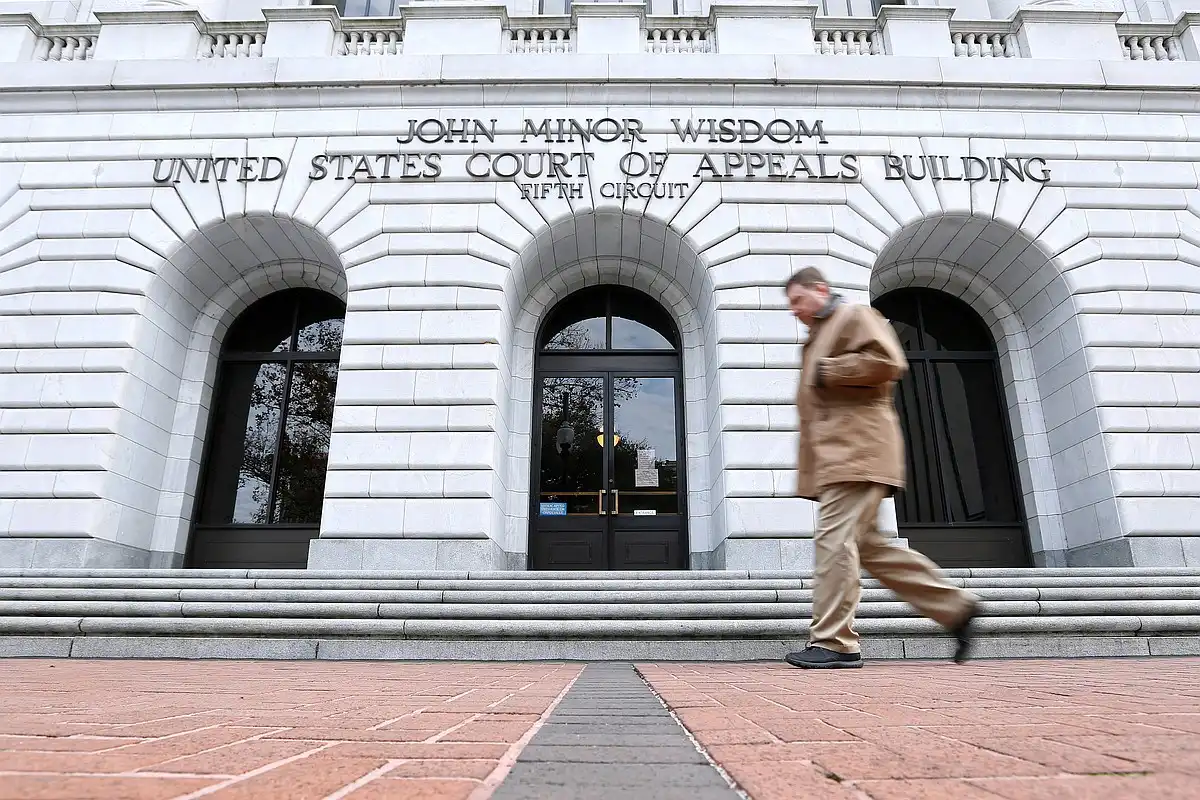
A federal appeals court has blocked a key provision of a Texas law that would have mandated content filtering on websites to prevent minors from accessing "harmful" speech. The U.S. Court of Appeals for the 5th Circuit ruled on Friday, July 24, 2026, that the monitoring and filtering requirements of the Securing Children Online through Parental Empowerment Act (SCOPE Act), also known as Texas House Bill 18, are preempted by Section 230 of the federal Communications Decency Act of 1996. This decision offers a significant reprieve for digital service providers (DSPs), including those in the adult industry, by preventing the imposition of broad, government-mandated content moderation technologies that could have far-reaching implications for platform design, data processing, and operational costs.
The ruling, a 2-1 decision, specifically targets the SCOPE Act's requirement for websites and online applications to "monitor and filter content accessible to known minors to prevent exposure to several categories of potentially harmful speech." This included material defined as obscene under Texas law, as well as content promoting or facilitating suicide, self-harm, eating disorders, substance abuse, stalking, bullying, harassment, grooming, trafficking, child pornography, or other sexual exploitation or abuse. For adult industry platforms, which inherently host content that could fall under broad definitions of "harmful" if not properly age-gated, the prospect of such a filtering mandate presented a complex engineering challenge, requiring sophisticated AI-driven content analysis and robust user identification systems to comply with state-specific definitions, all while navigating federal protections.
The Computer & Communications Industry Association (CCIA) and NetChoice, two prominent tech lobby groups whose members include Amazon, Google, and Meta Platforms, challenged these provisions. They argued that the law "would have forced websites to censor broad, vaguely defined categories of lawful speech." The 5th Circuit's decision affirms a preliminary injunction granted by a district court in August 2024, which held that the SCOPE Act's monitoring and filtering requirement is preempted by Section 230's prohibition on treating interactive computer services as the publisher or speaker of information provided by someone else. Texas Attorney General Ken Paxton had appealed this injunction but was unsuccessful in convincing the judges to reverse it.

How Does Section 230 Impact Content Filtering Requirements?
Section 230 of the Communications Decency Act provides broad immunity to interactive computer services from liability for information provided by third parties. This federal protection has been a cornerstone for online platforms, allowing them to host user-generated content without being held legally responsible for its nature, and also granting them the discretion to moderate content without being treated as publishers. The 5th Circuit judges noted that appeals courts "have interpreted Section 230 to provide DSPs with ‘broad immunity’ from ‘all claims stemming from their publication of information created by third parties.’"
Paxton argued that the Texas law was not preempted because it imposed "compliance duties, not publisher liability," and aligned with the child-protection goals of Section 230. However, the 5th Circuit panel rejected this argument, stating, "Actions to enforce the monitoring and filtering requirement are claims stemming from DSPs’ actions as publishers, that is, from their monitoring, screening, and deletion of content, and are thus squarely preempted by Section 230." This distinction is critical for adult industry platforms, as it reinforces the principle that platforms are generally not liable for user-generated content and are protected in their editorial decisions regarding content moderation, preventing states from mandating specific filtering technologies or policies that could be seen as infringing on this immunity.
Circuit Judge James Ho, a Trump appointee, dissented from the majority opinion regarding the content filtering rules. He contended that the SCOPE Act regulates "curation, not publication—first-party speech, not third-party speech." Ho argued that while posts on a social media feed are third-party speech, "the algorithm that social media companies design to curate that feed constitute the first-party speech of the companies." This perspective suggests a potential avenue for future legal challenges, where the distinction between a platform's active content curation (e.g., algorithmic recommendations) and passive hosting of third-party content could be further scrutinized. For adult platforms, this distinction could become particularly relevant as they increasingly leverage AI and machine learning for content discovery, personalization, and automated moderation, blurring the lines between user-generated content and platform-driven presentation.
What Age Verification and Ad Targeting Rules Remain Enforceable?
While the content filtering mandate was blocked, the 5th Circuit's decision was not a complete loss for Texas. The court upheld other parts of the SCOPE Act, which can now be enforced. These provisions are particularly relevant for adult industry platforms, as they touch upon fundamental aspects of user onboarding, data privacy, and monetization strategies.
The enforceable parts of the law include requirements for platforms:
- To make users register their ages before creating accounts.
- To not display targeted advertisements to known minors.
- To make commercially reasonable efforts to prevent advertisers from targeting known minors with ads for illegal products or activities.
- To verify that users are 18 or older if more than one-third of the content on the platform is obscene.
These requirements necessitate robust age verification technologies and sophisticated advertising infrastructure that can segment audiences based on age and prevent targeted ads to minors. For adult platforms, the "more than one-third of the content is obscene" threshold is a critical trigger, meaning that many, if not most, adult platforms will need to implement comprehensive age verification for all users to ensure compliance. This goes beyond simple self-attestation and likely requires more advanced methods like ID verification or biometric age estimation, impacting user experience, data privacy protocols, and the overall cost of platform operation.
Separately, the 5th Circuit, a famously conservative appeals court, has a history of upholding Texas laws imposing obligations on websites and online platforms. In a 2024 case, it upheld an age-verification requirement imposed on porn websites. The judges in Friday's ruling explicitly noted the difference between that age-verification requirement and the content-filtering rule in the new case. They found that, "Unlike the age-verification requirement we addressed in that case, [the SCOPE Act’s] monitoring and filtering requirement is all about filtering content, and is thus preempted." This distinction underscores that while platforms may be compelled to verify age, they are largely protected from being forced to actively filter or censor third-party content based on state-defined "harmful" criteria.
Furthermore, the U.S. Supreme Court, on July 6, 2026, declined to block Texas’ App Store Accountability Act, which requires age verification and parental consent for app downloads by minors. This law, signed by Governor Greg Abbott in 2025, mandates that users under 18 link their accounts to a parent’s or guardian’s account and receive approval for downloads. While distinct from the SCOPE Act, this Supreme Court decision reinforces the legal trend towards stricter age verification requirements for digital services, especially those accessible via app stores. For adult industry developers, this means that any mobile applications or downloadable software must integrate robust age verification and parental consent mechanisms, adding another layer of technical complexity and regulatory compliance to their development pipelines.
What Are the Engineering Implications for Adult Platforms?
The 5th Circuit's ruling provides a degree of clarity for adult industry platforms regarding the scope of state-mandated content moderation. While the immediate threat of forced content filtering is averted, the upheld age verification and ad targeting requirements present ongoing engineering and operational challenges. Platforms must invest in reliable and scalable age verification systems that can accurately determine user age without unduly burdening user experience or compromising privacy. This often involves integrating third-party age verification APIs, developing internal verification logic, and implementing robust data handling procedures to protect sensitive user information.
The requirement to prevent targeted advertisements to known minors, and to make commercially reasonable efforts to prevent ads for illegal products or activities, also demands sophisticated ad tech infrastructure. This includes granular audience segmentation capabilities, real-time ad serving logic that incorporates age data, and potentially AI-driven ad content analysis to ensure compliance. Platforms will need to audit their advertising partners and internal ad systems to ensure they meet these standards, which could involve significant re-engineering of existing ad delivery pipelines and data management platforms. The "one-third obscene content" trigger for mandatory 18+ age verification means that most adult platforms will need to implement comprehensive age verification for all users, regardless of whether they are "known minors," to avoid legal exposure.
The ongoing legal battles, such as the one in California where a different federal appeals court in March voided much of an injunction that blocked California from enforcing its own law, the California Age-Appropriate Design Code Act, highlight the evolving regulatory landscape. These cases underscore the need for adult industry platforms to build flexible and adaptable compliance frameworks. This includes modular age verification systems, configurable content moderation tools, and dynamic ad targeting capabilities that can be quickly adjusted to meet varying state-level requirements while maintaining federal Section 230 protections. The technical architecture must be resilient enough to handle a patchwork of regulations, ensuring that platforms can continue to operate legally and effectively across different jurisdictions without being forced into technologically unfeasible or legally risky content policing roles.