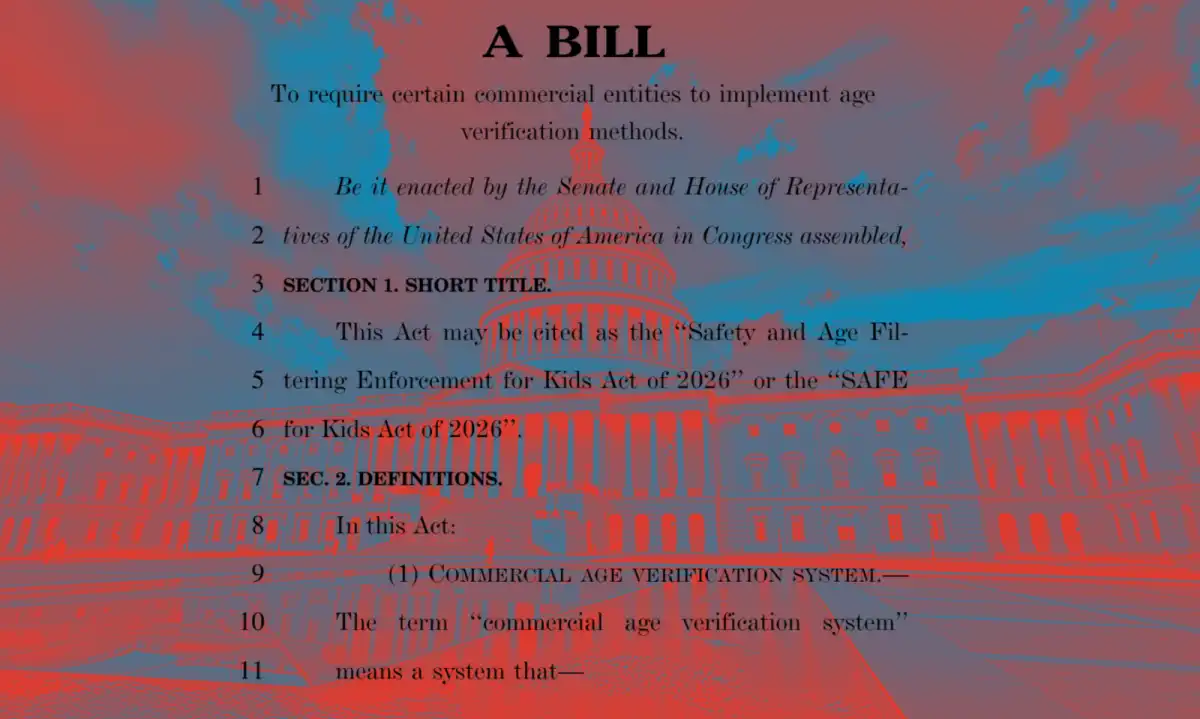

Senator Mike Lee of Utah has introduced the "Preventing Rampant Online Technological Exploitation and Criminal Trafficking (PROTECT) Act of 2026" (S 5129), a federal bill that would significantly expand record-keeping and consent verification requirements for platforms distributing sexually explicit content. The proposed legislation, introduced on Thursday, July 24, 2026, closely mirrors North Carolina's HB 805, enacted in 2025, which imposed rigorous new state-level obligations on adult sites for age verification, consent, and content removal. This federal initiative could compel a nationwide overhaul of technical infrastructure and operational protocols for adult content platforms, as well as potentially impacting mainstream social media.
The PROTECT Act of 2026 aims to go beyond existing federal record-keeping requirements under Section 2257, which mandates that producers of sexually explicit content maintain records verifying each performer's name and age via government ID. The new bill would require explicit written consent for each individual sexual act depicted in content, as well as separate, detailed consent for distribution, specifying geographic area, medium, and duration. Furthermore, the bill mandates the use of consent forms created or approved by the U.S. attorney general. This level of granular consent tracking and documentation presents a substantial technical and logistical challenge for platforms, particularly those hosting large volumes of user-generated content (UGC).
What New Technical Demands Would the PROTECT Act Impose?
The PROTECT Act's provisions for age and consent verification would necessitate significant technological upgrades and process re-engineering for covered platforms. The bill requires "reasonable steps" to verify the age and consent of individuals who upload and appear in content. For age verification, this implies a shift away from simple self-certification, moving towards "commercially reasonable verification solutions" capable of confirming a user's age with high reliability. Acceptable methods include government-issued identification checks, such as driver's licenses or passports, and integration with third-party age and identity verification providers. These providers would cross-reference user information against authoritative databases, minimizing the need for platforms to store sensitive data directly. Implementing such robust age verification systems requires sophisticated API integrations, secure data handling protocols, and potentially AI-driven document analysis to ensure compliance and mitigate fraud.

Beyond age verification, the mandate for explicit written consent for each sexual act and detailed distribution consent introduces complex data management and content metadata requirements. Platforms would need systems capable of associating specific consent forms with individual content segments or entire works, tracking granular permissions for distribution across different mediums and geographic regions, and managing consent duration. This could involve developing new database schemas, content tagging systems, and user interfaces for performers and producers to manage and revoke consent. The bill also entitles anyone appearing in adult content to withdraw their consent at any time, a provision that effectively invalidates traditional model contracts in North Carolina and would require platforms to implement real-time content removal mechanisms, posing significant challenges for content delivery networks (CDNs) and distributed storage systems.
Which Platforms Face the Broadest Impact?
The definition of "covered platforms" in the PROTECT Act is broad, encompassing any "website, online service, online application, or mobile application ... that serves the public ... [and] ... primarily provides a forum for user-generated content." While clearly targeting adult sites, this definition could also extend to mainstream social media platforms like X, Reddit, Discord, Telegram, and even YouTube, according to Free Speech Coalition Director of Public Policy Mike Stabile. Stabile noted that the adult industry already largely complies with many of the bill's major provisions, such as age and consent verification. He suggested the most significant impact would be felt by social media platforms that allow for the distribution of even non-explicit sexual material.
The bill's definition of "pornographic image" as any visual depiction of sexually explicit conduct, "actual or feigned," further broadens its scope. This could obligate mainstream platforms to collect documentation not only for adult content but also for mainstream films, parody content, documentary films, and even artistic works. This expansive definition means platforms would need to develop sophisticated content analysis and classification systems, potentially leveraging AI and machine learning, to identify and categorize content requiring consent documentation. The scale of user-generated content on these mainstream platforms makes universal compliance with such detailed record-keeping and consent management requirements a monumental, potentially "impossible and costly" task, as highlighted by critics.
What Are the Legal and Operational Risks for Operators?
The PROTECT Act proposes both civil and criminal penalties for violations. The U.S. attorney general could levy fines of up to $10,000 per day per image found in violation, and private individuals could sue for damages of $10,000 or more. First-time violators could face up to five years in prison, fines, or both, while repeat violators could face two to 10 years in prison, fines, or both. These severe penalties create substantial legal and operational risks for platforms, particularly those hosting large volumes of UGC, where verifying every individual's age, identity, and consent with "complete certainty" is complex.
Industry attorney Corey Silverstein expressed concern that Congress is responding to public safety concerns by placing "increasingly burdensome obligations on platforms that distribute lawful, constitutionally protected speech." He noted that the bill "appears to assume that platforms can verify the age, identity, and consent of every individual depicted in every uploaded work with complete certainty," which is "far more complex" in reality. Silverstein warned that the "inevitable result may be that many platforms simply refuse to host lawful content rather than risk severe civil or criminal liability," leading to a chilling effect on free expression. This echoes the impact of FOSTA/SESTA, which, despite targeting sex trafficking, "dramatically reduced lawful online speech while doing little to eliminate the underlying criminal activity." Industry attorney Lawrence Walters also stated that the bill is "openly hostile to adult content producers and distributors, and triggers significant data privacy issues."
How Does This Compare to Existing State-Level Regulations?
The PROTECT Act of 2026 strongly echoes North Carolina's HB 805, enacted in 2025, which itself was influenced by Senator Lee's failed PROTECT Act of 2024. North Carolina's HB 805, also known as the "Prevent Sexual Exploitation of Women and Minors Act," imposed strict requirements for age verification, consent, and content removal on adult sites. The sections of HB 805 related to the adult entertainment industry became effective on December 1, 2025. The North Carolina law mandates "commercially reasonable verification solutions" for age, including government-issued identification checks or third-party verification providers, and prohibits businesses from retaining sensitive identity information longer than necessary. If a platform "knowingly fails to verify a user’s age," it can be held liable for damages.
Similar to the proposed federal bill, HB 805 requires proof of consent not only for content distribution but also for each sexual act depicted, and it provides for content removal upon request. North Carolina's law also requires platforms to establish a procedure for removing content at a person's request and designate employees responsible for handling such requests. The federal PROTECT Act would expand these state-level requirements nationwide, creating a uniform, albeit stringent, regulatory landscape. This shift from fragmented state regulations to a federal mandate would require adult industry platforms, and potentially broader social media, to standardize their compliance infrastructure and data management practices on a national scale.