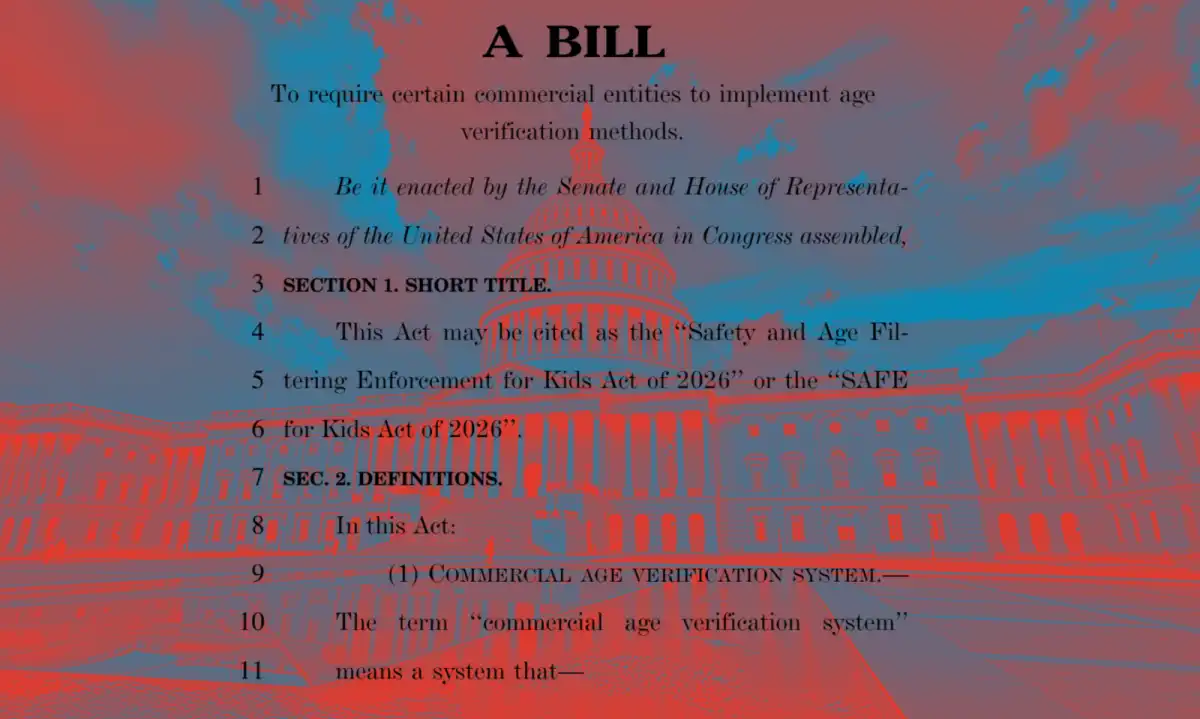
U.S. Senator Jim Banks has introduced a federal age verification bill that would require commercial pornography websites to implement age verification measures to prevent minors from accessing adult content online.
What Happened
The "Safety and Age Filtering Enforcement (SAFE) for Kids Act" was introduced by Senator Banks on Wednesday, June 10, 2026. The bill aims to protect children from exposure to explicit material online by requiring age verification measures on commercial pornography websites.
The legislation would grant enforcement authority to the Federal Trade Commission through consumer protection law and authorize the Department of Justice to investigate platforms that knowingly violate the law. It also creates a private right of action, allowing individuals, including parents and legal guardians, to bring civil actions against covered entities that knowingly violate the law.

Background and Context
The introduction of this bill comes after more than 25 states have already enacted legislation requiring commercial pornography websites to implement age verification measures. The Supreme Court has also upheld these laws in Free Speech Coalition vs. Paxton, recognizing the government's interest in protecting children from exposure to explicit material online.
Senator Banks has been a vocal advocate for stricter regulations on adult content online. In May, he urged Acting Attorney General Todd Blanche to reestablish the Department of Justice's defunct Obscenity Prosecution Task Force. The task force was responsible for investigating and prosecuting cases involving obscenity and child exploitation.
Why it Matters to the Industry
The introduction of this bill has significant implications for the adult industry. If passed, it would require commercial pornography websites to implement age verification measures, which could lead to increased costs and complexity for website operators. The bill also grants enforcement authority to the Federal Trade Commission and authorizes the Department of Justice to investigate platforms that knowingly violate the law.
The legislation's focus on age verification is also noteworthy. The bill defines "sexual material harmful to minors" as content that appeals or panders to the prurient interest, exploits or devotes itself to descriptions of sexual acts or contact, and lacks serious literary, artistic, political, or scientific value for minors.
What Comes Next
The bill has been referred to the U.S. Senate's Committee on Commerce, Science, and Transportation. Whether it gains traction may depend in part on how current efforts to enact broader online safety legislation play out. The proposed Kids Internet and Digital Safety (KIDS) Act, which would also make age verification by adult websites federal law, appears stalled for the moment.
Industry stakeholders will be watching closely as this bill progresses through Congress. If passed, it could have significant implications for the adult industry's approach to age verification and online safety.
Key Facts
- The "Safety and Age Filtering Enforcement (SAFE) for Kids Act" was introduced by Senator Jim Banks on June 10, 2026.
- The bill requires commercial pornography websites to implement age verification measures to prevent minors from accessing adult content online.
- More than 25 states have already enacted legislation requiring commercial pornography websites to implement age verification measures.
- The Supreme Court has upheld these laws in Free Speech Coalition vs. Paxton, recognizing the government's interest in protecting children from exposure to explicit material online.
- The bill grants enforcement authority to the Federal Trade Commission and authorizes the Department of Justice to investigate platforms that knowingly violate the law.