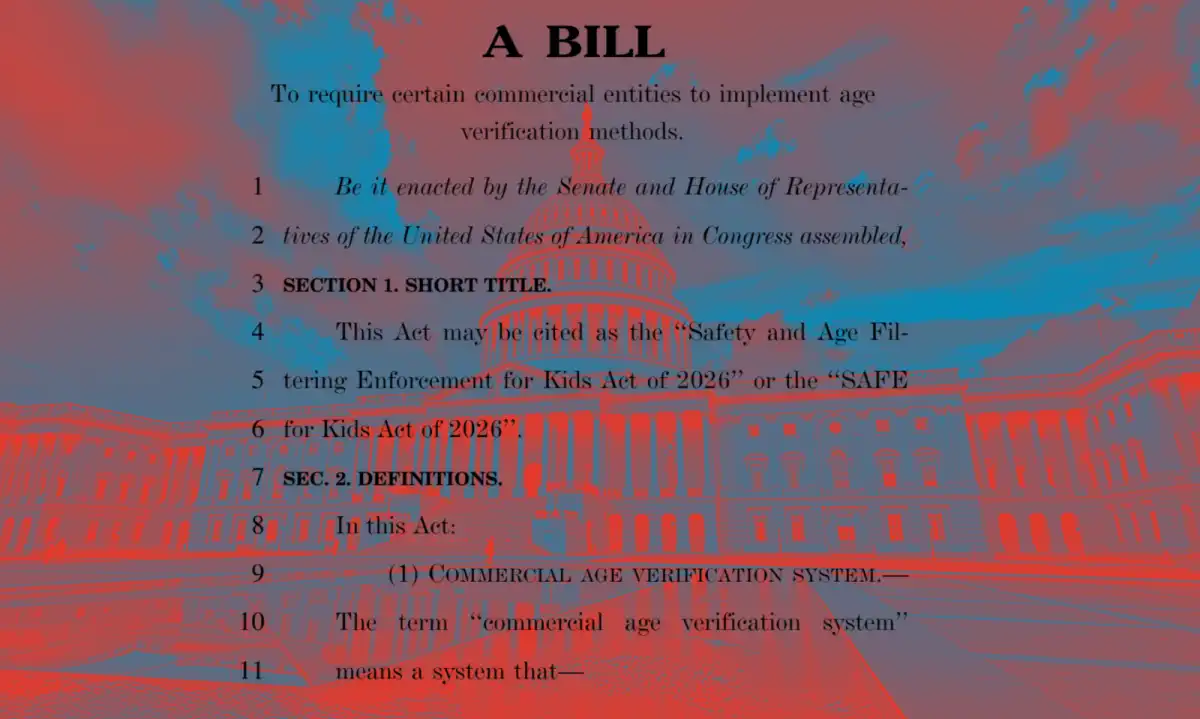
The U.S. House of Representatives has passed the Kids Internet and Digital Safety (KIDS) Act, a comprehensive bill that includes provisions for a federal age verification (AV) mandate for adult websites. This development, occurring on Monday, June 30, 2026, introduces a new layer of complexity for adult industry platforms and operators already grappling with a fragmented landscape of state-level AV laws, though the bill faces significant hurdles in the Senate.
The KIDS Act, an omnibus bill combining several online safety initiatives, incorporates an updated version of the Shielding Children’s Retinas from Egregious Exposure on the Net (SCREEN) Act. This specific component would establish nationwide age verification requirements for adult websites, moving beyond current self-declaration methods. For developers and platform operators, this means a potential shift towards a federally defined standard for age-gating technologies, requiring a "technology verification measure" that employs a system or process to determine if a user is "more likely than not" a minor. Such a mandate could drive innovation in robust, privacy-preserving age verification solutions, while also demanding enhanced capabilities to detect and mitigate circumvention attempts, such as those involving Virtual Private Networks (VPNs).
What Technology Verification Measures Would Be Required?
Title I of the KIDS Act, specifically "Shielding Minors From Obscenity," outlines the technical requirements for adult sites. The proposed law mandates the implementation of a "technology verification measure," which is defined as a system or process designed to determine, with a greater than 50% probability, whether a user of a covered platform is a minor. This goes beyond simple self-declaration, pushing platforms towards more sophisticated identity and age assessment technologies. The implications for engineering teams are substantial, requiring the integration or development of solutions capable of reliably assessing age without necessarily collecting excessive personal data, a balance critical for user privacy and compliance.

Beyond initial age verification, the bill also requires sites and their third-party AV providers to take "reasonable measures" to address the circumvention of these technology verification measures. This provision directly targets the widespread use of VPNs and other anonymizing technologies that users might employ to bypass age gates. For platform developers, this translates into a need for advanced fraud detection and network analysis capabilities. Implementing such measures could involve real-time IP analysis, behavioral analytics, or other sophisticated techniques to identify and block users attempting to circumvent verification. Failure to comply with any section of the proposed law would be considered a violation of the Federal Trade Commission Act, potentially leading to civil penalties of up to $10,000 per violation, underscoring the financial and operational risks associated with non-compliance.
How Would Federal Law Interact with Existing State AV Mandates?
The passage of the KIDS Act in the House introduces a complex compliance landscape for adult industry platforms. While the legislation originally included language that would have invalidated existing state AV laws, the amended version passed by the House specifies that the new federal law would only preempt state laws to the extent that they conflict with the Act. Crucially, it explicitly permits states to enact and enforce requirements stricter than those included in the KIDS Act. This nuanced approach means that instead of simplifying compliance with a single federal standard, operators may find themselves navigating a dual system of federal minimums and potentially more stringent state-specific regulations.
This outcome differs significantly from earlier hopes within the industry. In March, industry attorney Corey Silverstein noted that the various state-level AV laws had "created absolute havoc throughout the industry, containing small differences that make compliance a nightmare for service providers." Fellow attorney Lawrence Walters had observed that an earlier version of the KIDS Act's age verification mandate appeared "more forgiving" than most state AV laws. However, the House-passed bill frames the KIDS Act as a minimum standard. This suggests that existing state laws would likely remain in effect, while states currently without AV laws would be compelled to enforce the new federal standards. This scenario could lead to a continued patchwork of regulations, demanding flexible and adaptable age verification systems capable of meeting diverse and evolving legal requirements across different jurisdictions.
What Are the Broader Legislative Challenges for the KIDS Act?
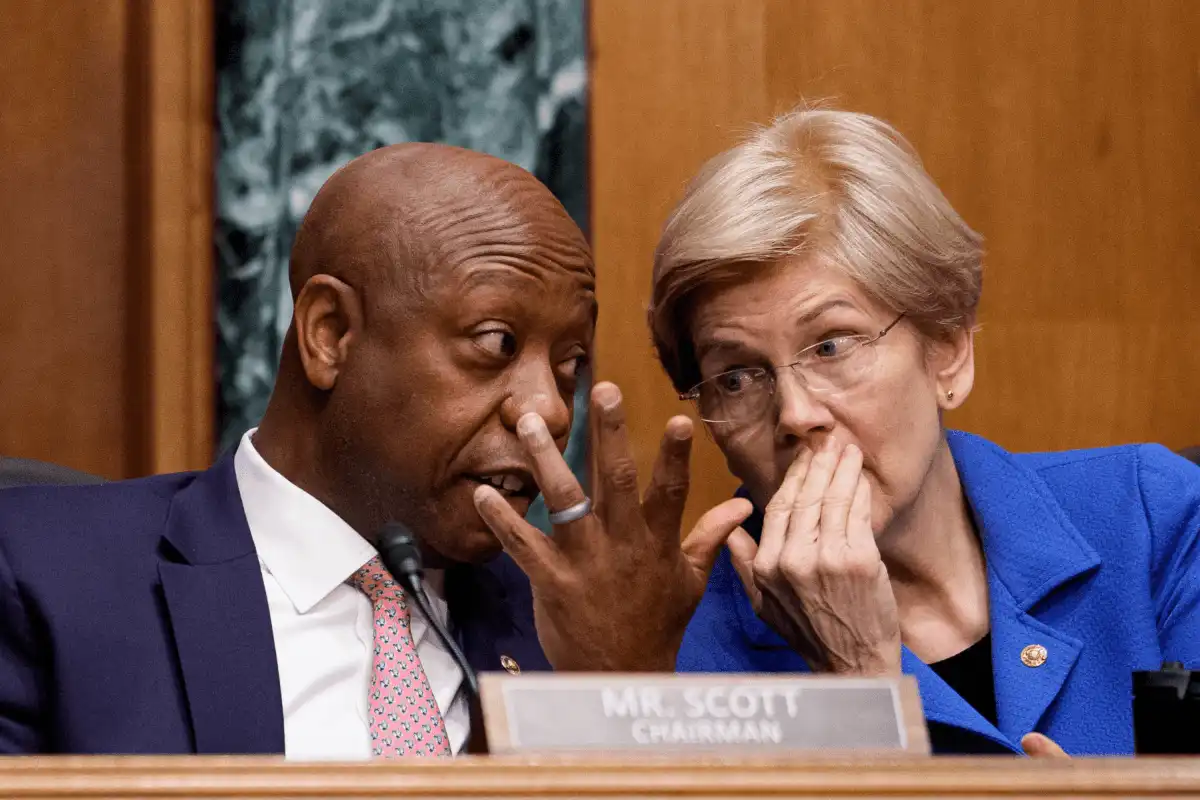
Despite its passage in the House by a vote of 267 to 117, including 104 Democrats, the KIDS Act faces significant opposition in the Senate. The primary sticking point is not the age verification provisions, which have received little attention in Congress or media, but rather another component of the omnibus bill: the Kids Online Safety Act (KOSA). Democrats and a coalition of online safety organizations have vocally opposed the KIDS Act's softening of language in KOSA that would have assigned a "duty of care" to social media platforms, obliging them to prevent and mitigate potential harms to minors. The House-passed KIDS Act specifically rules out such a duty of care, a stance that is certain to create a roadblock in the Senate, which is considering a version of KOSA that includes this "duty of care" language.
The legislative journey of the KIDS Act highlights the broader challenges in enacting comprehensive online safety legislation, particularly when diverse technological and ethical considerations are at play. If the House and Senate ultimately reconcile their different versions of KOSA, the age verification section of the KIDS Act could either be included in a final package or fall by the wayside. This uncertainty underscores the volatile nature of federal legislative efforts concerning internet regulation. For adult industry platforms, this means continuing to monitor legislative developments closely, as the eventual outcome will dictate the scope and nature of future compliance requirements for age verification technologies.
The current legislative environment, with its ongoing debates over federal versus state authority and the specifics of online platform responsibilities, creates an unstable regulatory landscape. This instability necessitates that adult industry developers and operators design their age verification and content access systems with maximum flexibility, capable of adapting to potential federal mandates, stricter state laws, or a combination of both. The need for robust, scalable, and legally compliant age verification technology remains a critical engineering and operational challenge, irrespective of the final form of federal legislation.