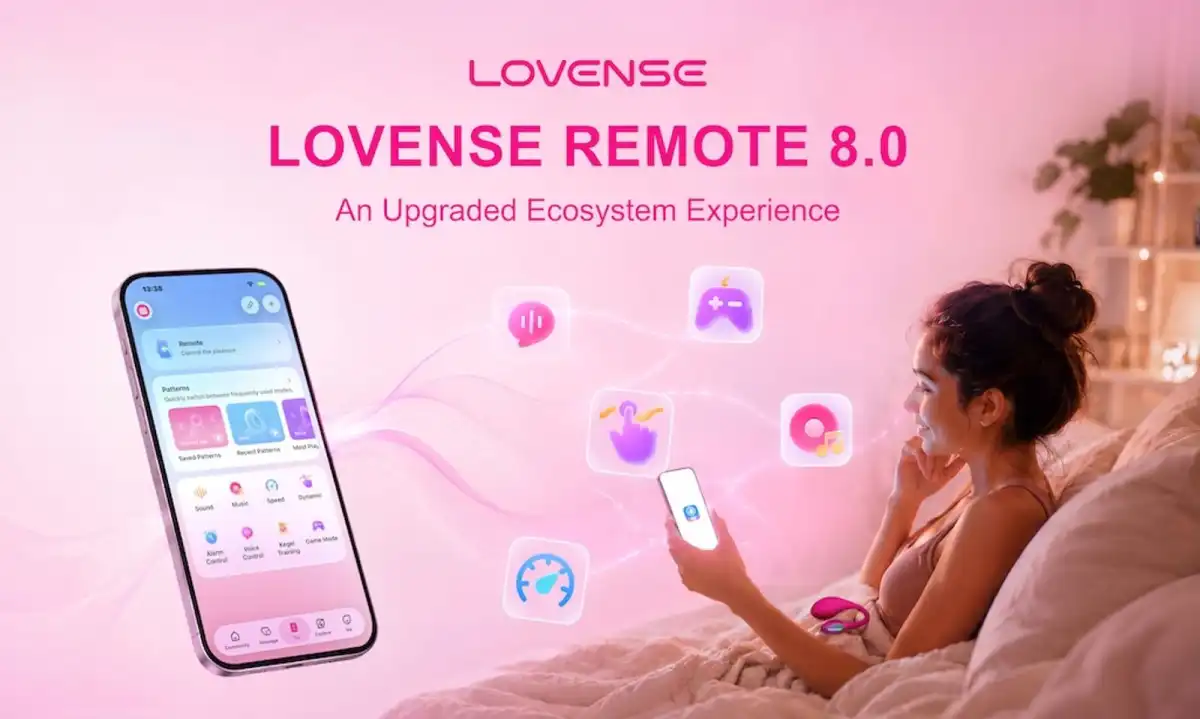
Lovense has rolled out a significant update to its Remote app, version 8.0, which aims to unify the user experience across its hardware, content, interactive features, and community functionalities. Launched in July 2026, the update represents a strategic move to integrate previously distinct aspects of the Lovense ecosystem into a more cohesive and accessible platform, with device control remaining a central, persistent element.
The Remote 8.0 update is a critical development for platforms and developers in the interactive adult technology space. By creating a more integrated environment for device control, content discovery, and community interaction, Lovense is addressing the growing demand for seamless, multi-faceted user experiences. This approach can inform how other platforms design their own ecosystems, particularly those that blend hardware control with digital content and social features. The challenge for developers lies in balancing robust device functionality with intuitive content navigation and community engagement, all while maintaining a high standard of privacy and security.
What Does Remote 8.0's Unified Ecosystem Mean for Developers?
The core of Remote 8.0's architectural shift is its organization around five main spaces: Community, Message, Toy, Explore, and Me. This structure is designed to provide users with a more consistent pathway to move between controlling connected devices, discovering content, accessing interactive experiences, and connecting with others. For developers, this signifies a move towards a "super-app" model within the interactive adult toy sector, where multiple functionalities are consolidated into a single, streamlined interface. This consolidation can reduce friction for users, potentially increasing engagement and retention, but it also introduces complexity in backend integration and front-end design.

A key engineering challenge addressed in Remote 8.0 is maintaining continuous access to device controls. When users navigate away from the main control panel, connected devices continue to operate, and a floating control bubble remains available for intensity adjustments. Additionally, physical volume keys can be used for direct intensity changes. This persistent control mechanism is crucial for interactive experiences, ensuring that users can engage with other app features without interrupting their primary interaction with the hardware. Implementing such a feature requires robust background processing, efficient state management, and careful consideration of user interface overlays to prevent interference with other app elements. Developers building similar interactive platforms must consider how to provide uninterrupted control over connected hardware, especially in scenarios where real-time responsiveness is paramount.
The update also integrates community participation and shared content more closely with the control experience. Lovense Bond offers a dedicated environment for community conversations and discovery, while the Patterns feature allows users to share and explore custom vibration patterns. This integration of social and user-generated content directly within the device control application highlights a trend towards community-driven interaction in the adult tech space. For platform operators, this means investing in robust content moderation tools, scalable data storage for user-generated patterns, and secure communication channels. The ability to foster a vibrant community around hardware interaction can be a significant differentiator, but it also necessitates strong cybersecurity measures to protect user data and privacy within these shared spaces.
How Does Persistent Device Control Impact User Experience and Platform Design?
The emphasis on persistent access to toy controls in Remote 8.0 is a significant user experience enhancement that has direct implications for platform design. By allowing connected devices to continue running and providing a floating control bubble for intensity adjustments, Lovense aims to reduce the need for users to repeatedly return to a main control screen. This design choice acknowledges that users often multitask within an application, and interrupting a core function to access other features can lead to frustration and disengagement. For developers, this means designing applications with a layered interface architecture, where essential controls can overlay or run concurrently with other content and social features.
Implementing such persistent controls requires careful consideration of system resources, particularly on mobile platforms where the Remote app is available globally on iOS and Android. Maintaining background processes for device control while simultaneously rendering content, managing messages, and facilitating community interactions demands efficient code and optimized resource allocation. Developers must ensure that these concurrent operations do not lead to performance degradation, battery drain, or security vulnerabilities. Furthermore, the integration of physical volume keys for direct intensity changes adds another layer of interaction, requiring robust API integration with device hardware and operating systems to ensure consistent and reliable performance across a diverse range of devices.
The goal of enabling users to explore more of the Lovense ecosystem without interruption underscores a broader trend in app development: creating seamless, immersive experiences. For adult industry platforms, where user engagement often relies on real-time interaction and emotional immersion, minimizing friction points is crucial. This design philosophy can extend to streaming platforms that integrate interactive toys, virtual reality experiences with haptic feedback, or AI companions that control physical devices. The technical challenge lies in building a resilient and responsive backend that can handle simultaneous data streams from hardware, user input, and content delivery, all while maintaining low latency and high reliability. The success of Remote 8.0 in this regard could serve as a model for other platforms looking to deepen user engagement through integrated and uninterrupted interactive experiences.
What Are the Technical Challenges of Integrating Community and Content with Hardware Control?
Integrating community features and shared content directly into an app primarily focused on hardware control, as seen with Lovense Bond and the Patterns feature in Remote 8.0, presents several technical challenges. The creation of a dedicated environment for community conversations and discovery, alongside the ability for users to share and explore vibration patterns, requires robust infrastructure for social networking and user-generated content (UGC). This includes scalable database solutions for storing user profiles, chat histories, and shared patterns, as well as efficient content delivery networks (CDNs) for distributing patterns and other media.
Moreover, managing user-generated content, especially in the context of interactive adult experiences, introduces significant moderation and security requirements. Platforms must implement sophisticated content filtering and reporting mechanisms to ensure compliance with community guidelines and legal standards. This often involves a combination of automated AI-driven moderation and human oversight, which can be resource-intensive. For shared vibration patterns, developers need to consider data formats that are interoperable across different devices and robust version control systems to manage updates and modifications to patterns. Ensuring the privacy and security of user data within these community spaces, particularly sensitive interaction data, is paramount and necessitates strong encryption, access controls, and adherence to data protection regulations.
The objective of creating a more connected path between device control and other parts of the ecosystem, encompassing communication, personal activity, and interactive experiences, requires a unified data architecture. This means designing APIs and data models that can seamlessly link user interactions with hardware to their social activities and content consumption within the app. Such an architecture facilitates personalized recommendations for content and community engagement based on device usage, enhancing the overall user journey. However, it also demands careful attention to data governance and user consent, especially when collecting and utilizing data across different facets of the application. The ongoing development of Remote's core experiences in future releases suggests a continuous commitment to refining these integrations, highlighting the iterative nature of building complex, interconnected digital ecosystems in the adult technology sector.