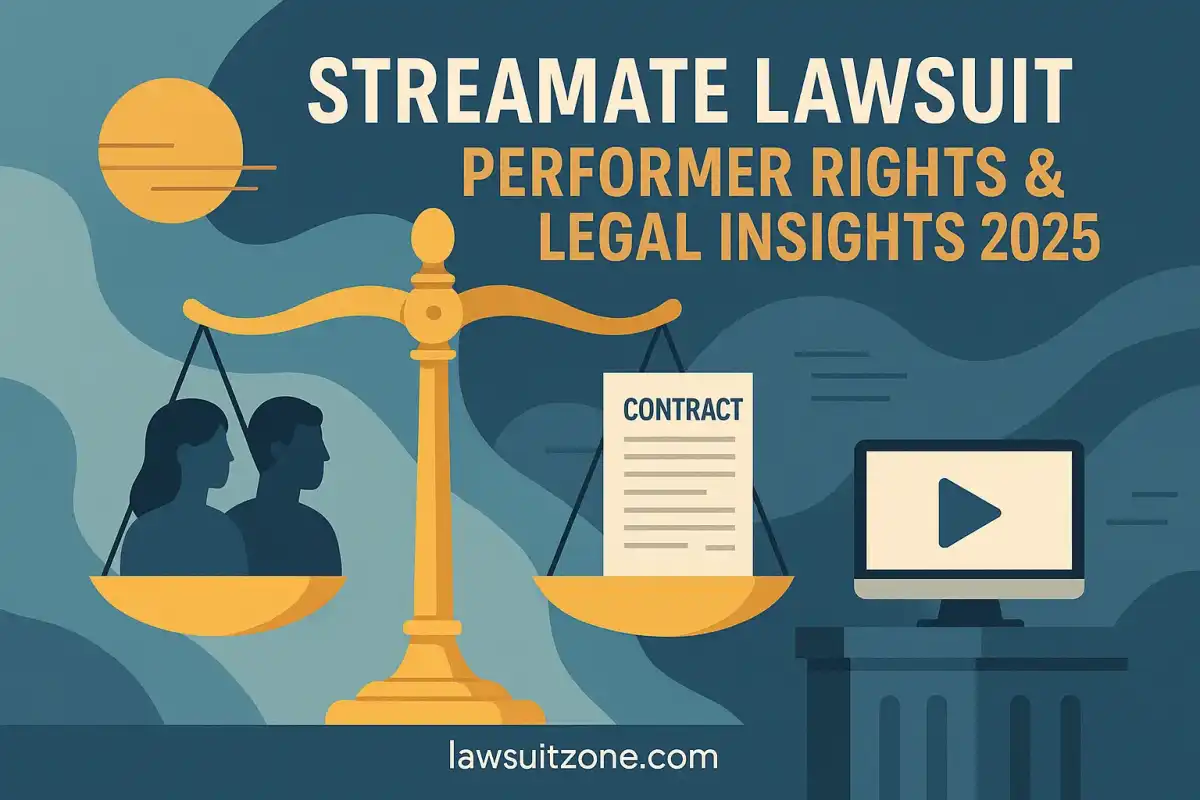
A federal judge in New Jersey has issued a complex ruling classifying performers on adult camming platform Streamate.com as independent contractors under federal law and employees under state wage laws. The decision stems from a federal class action lawsuit filed against Streamate's corporate parents in 2023, which alleged misclassification of performers and withheld pay.
What Happened
The ruling, issued by U.S. District Judge Madeline Cox Arleo on June 3, 2026, is the penultimate act in a long-running lawsuit filed against Streamate's corporate parents, ICF Technology and Accretive Technology Group. The suit was brought by performer Mia Tomasello, who claimed that she and other performers were misclassified as independent contractors under New Jersey's hours and wage laws.
The court found that while federal law is lax in defining independent contractor status, the plaintiffs failed to meet the "economic realities test" required for employee classification. However, under New Jersey state law, which imposes a more worker-friendly standard, the court ruled that Streamate performers are employees.

Background and Context
Streamate.com is one of the largest webcam model platforms in the world, connecting performers with paying viewers and taking a percentage of earnings from every transaction. The platform has been criticized for its revenue-sharing model, which some argue favors Streamate over performers. In 2023, Tomasello filed a class action lawsuit against Streamate's corporate parents, alleging misclassification of performers and withheld pay.
The lawsuit targets three main areas: worker misclassification, payment disputes, and data privacy concerns. Performers claim that they were labeled as independent contractors instead of employees, leading to unequal revenue splits and unauthorized deductions from their earnings. The suit also alleges that Streamate mishandled personal performer and user data, exposing it to potential misuse.
Why It Matters to the Industry
The ruling has significant implications for the adult industry, which has long grappled with issues of worker classification, revenue sharing, and data protection. The decision highlights the need for platforms like Streamate to re-examine their business models and ensure that performers are fairly compensated for their work.
As the industry continues to evolve, this ruling serves as a reminder that companies must prioritize transparency and fairness in their dealings with performers. By classifying performers as employees under state law, the court has set a precedent for future cases and may prompt other platforms to re-evaluate their own business practices.
What Comes Next
The ruling is not final, as the plaintiffs have been granted partial wins in the litigation. The next step will be an adjudication of damages to recover unpaid wages and tips for over 400 Class Members. The decision also raises questions about the future of worker classification in the adult industry, with potential implications for other platforms and performers.
Key Facts
- The ruling classifies Streamate performers as employees under New Jersey state law but independent contractors under federal law.
- The lawsuit alleges misclassification of performers, withheld pay, and data privacy concerns.
- The court found that Streamate's revenue-sharing model favors the platform over performers.
- The decision has significant implications for the adult industry, highlighting the need for platforms to prioritize transparency and fairness.
- The next step will be an adjudication of damages to recover unpaid wages and tips for over 400 Class Members.