The United Nations has come under fire from the Free Speech Coalition for issuing a "pro-censorship proclamation" that targets adult platforms and their users.
What Happened
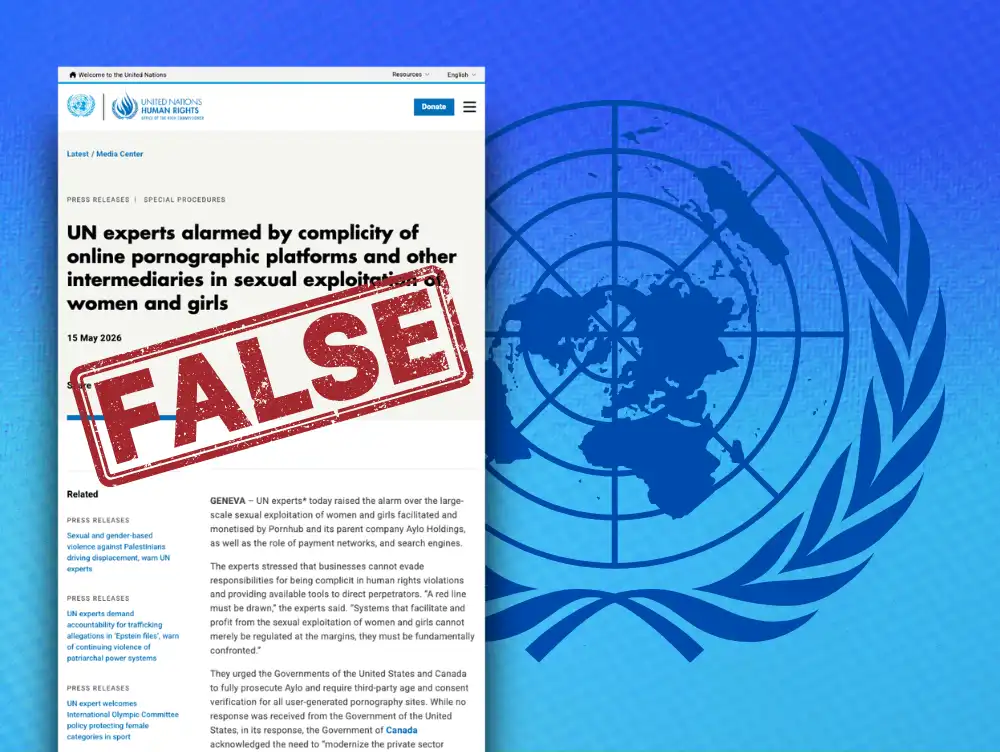
Last week, two UN Special Rapporteurs, Reem Alsalem and Ana Brian Nougrères, issued a press release calling for the prosecution of adult platforms that allow user-generated content. They accused these platforms of human rights violations and complicity in criminal activity, despite clear evidence to the contrary.
The statement is particularly disingenuous given that adult platforms have led the online tech sector in the fight against exploitation, developing best-in-class tools for identifying, blocking, and reporting illegal content. Unlike social media platforms or messaging services, adult companies extensively verify age and consent of those appearing on their sites.

Background and Context
This is not the first time that Ms. Alsalem has called for censorship in the adult industry. In a previous report, she advocated for both production and possession of explicit content to be criminalized, labeling it "torture" and a violation of human dignity. She also disregarded direct requests from sex workers for respect and dignity, calling the difference between sex work and trafficking "artificial".
Ms. Alsalem's statement focuses entirely on adult industry platforms rather than mainstream social networks where non-consensual intimate images (NCII), child sexual abuse material (CSAM), and other illegal content is actually uploaded and distributed. This is not an honest effort to protect victims, but a pretext for punishing the legal, regulated industry that facilitates the autonomy and prosperity of sex workers.
Why It Matters to the Industry
The attack on adult platforms by the UN Special Rapporteurs has significant implications for the industry. Attacks on lawful adult platforms lead to more dangerous conditions for sex workers, who are denied agency, income, and dignity. The fight against illegal and non-consensual content can only be won by recognizing the right of sex workers to engage in legal, consensual labor.
The UN's pro-censorship policies also have a chilling effect on free speech and expression. By targeting adult platforms, the UN is sending a message that certain types of content are unacceptable, even if they are created and shared consensually by adults. This can lead to self-censorship and a lack of innovation in the industry.
What Comes Next
The Free Speech Coalition has vowed to continue fighting for policies grounded in evidence, dignity, and the actual voices of sex workers. The coalition will work to counter the UN's pro-censorship efforts and promote a more nuanced understanding of the adult industry and its role in society.
Key Facts
- The UN Special Rapporteurs Reem Alsalem and Ana Brian Nougrères issued a press release calling for the prosecution of adult platforms that allow user-generated content.
- The statement accused adult platforms of human rights violations and complicity in criminal activity, despite clear evidence to the contrary.
- Adult platforms have led the online tech sector in the fight against exploitation, developing best-in-class tools for identifying, blocking, and reporting illegal content.
- The UN's pro-censorship policies have significant implications for the industry, including a chilling effect on free speech and expression.
- The Free Speech Coalition has vowed to continue fighting for policies grounded in evidence, dignity, and the actual voices of sex workers.
Related Developments
In related news, the Foreign Censorship Threat report by the US House Judiciary Committee highlighted the dangers of censorship and its impact on free speech. The report noted that censorship can have a chilling effect on innovation and creativity, particularly in industries where content is often subjective or controversial.
The report also emphasized the importance of protecting freedom of expression and the need for policymakers to be aware of the potential consequences of censorship. In the context of the adult industry, this means recognizing the right of sex workers to engage in legal, consensual labor and promoting policies that support their autonomy and dignity.