
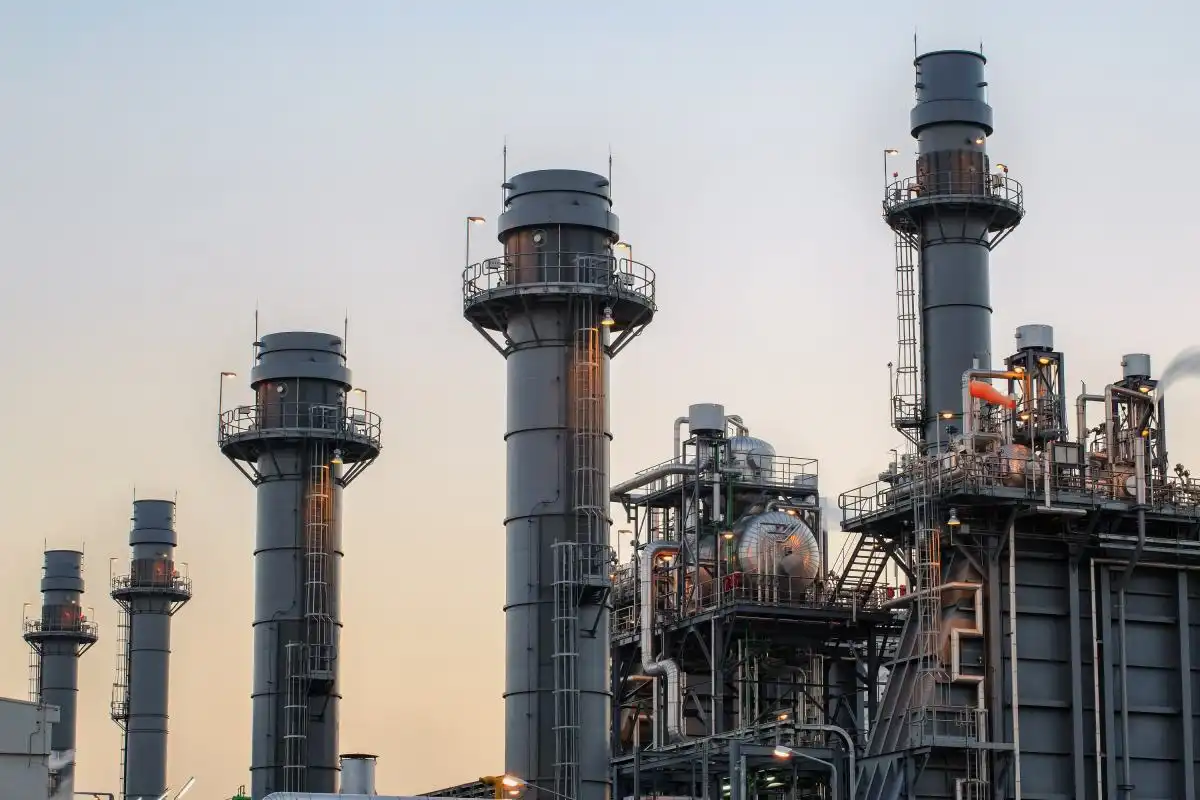
Amazon is financing a massive private natural gas power plant in Pecos County, Texas, to power a new data center campus, a move that could establish the facility as the single largest source of greenhouse gas emissions in the United States. This development highlights the escalating energy demands of artificial intelligence (AI) operations and the resulting infrastructure challenges for technology companies, including those in the adult industry, which rely heavily on robust and scalable data center capabilities for streaming, content delivery, and AI-driven features.
The planned GW Ranch power plant, developed by Pacifico Energy with significant investment from Amazon, is permitted to emit up to 33 million tons of carbon dioxide annually, according to Cleanview, a market intelligence company tracking data centers and their associated power projects. This permitted emission level surpasses that of any other power plant currently operating in the U.S., including the country's largest coal plants. While facilities rarely emit at their maximum permitted capacity, the sheer scale of the permit underscores the potential environmental impact. The plant is designed with 35 natural-gas turbines capable of generating 7.65 gigawatts of electricity, primarily intended to serve Amazon’s new data center campus in West Texas. Initially, the plant would not be connected to the state’s power grid, operating as a dedicated power source for the data center.
For adult industry platforms, which often handle vast amounts of real-time video streaming, high-resolution content storage, and increasingly complex AI-driven moderation, recommendation, and avatar technologies, reliable and high-capacity data centers are non-negotiable. The ability to secure dedicated power infrastructure, as Amazon is doing, could be seen as a strategic advantage in ensuring uninterrupted service and scaling operations without direct reliance on potentially strained public grids. However, the environmental implications and the public scrutiny such projects attract could also become a factor for companies navigating corporate social responsibility and public perception.

The Growing Energy Footprint of AI and Data Centers
The decision by Amazon to invest in a private, gas-burning power plant is indicative of a broader trend among major tech companies grappling with the immense energy requirements of AI. AI technologies have already significantly impacted Amazon’s carbon emissions, which reportedly increased by 16% last year. This trend runs counter to Amazon’s Climate Pledge, which aimed for carbon neutrality by 2040. Margaret Callahan, an Amazon spokeswoman, acknowledged that "The world looks different now than when we co-founded the climate pledge," while maintaining that "our commitment hasn’t changed."
The escalating demands of AI data centers have led many companies, including Meta and Google, to pursue building their own power plants, often turning to natural gas, coal, and other non-renewable energy sources. This shift reflects the urgent need for consistent and substantial power that existing grid infrastructure may not always readily provide, especially in regions experiencing rapid data center expansion. The Trump administration has also reportedly sought to lift restrictions on such polluting power plants, potentially easing the regulatory path for these energy-intensive projects.
For adult industry operators, the implications are significant. As AI becomes more integral to platform functionality—from advanced age verification and content moderation algorithms to generative AI for virtual performers and interactive experiences—the underlying computational load will only grow. This necessitates access to data centers with robust power infrastructure, whether through hyperscalers like Amazon Web Services (AWS) or through proprietary facilities. Understanding the energy sources and environmental impact of these foundational technologies becomes crucial for long-term planning and operational sustainability.
Why Dedicated Power Infrastructure Matters for High-Demand Platforms
Amazon’s investment in an on-site power plant for its Pecos County data center highlights a strategy to ensure stable and cost-effective electricity for its operations. By generating its own power, Amazon states it aims to avoid passing increased electricity costs onto consumers, a growing concern as AI infrastructure drives up utility bills. An Amazon spokesperson noted, "Amazon believes in paying the full costs of powering our operations," adding that the new data center campus "is powered by new on-site generation that won't raise electricity costs for Texas families and designed to transition to grid-connected service as interconnection timelines allow." The company also mentioned exploring opportunities for on-site solar energy and battery storage, and utilizing "non-potable, brackish groundwater" to minimize pressure on local watersheds.
This approach to dedicated power generation offers several advantages for high-demand platforms. Firstly, it provides a direct and reliable power supply, mitigating risks associated with grid instability or fluctuating energy prices. For adult streaming platforms, where uptime and low latency are paramount for user experience and performer income, a consistent power source is critical. Secondly, it allows for greater control over energy costs, potentially leading to more predictable operational expenses in the long run, even if the initial investment is substantial. This financial predictability can be vital for businesses operating in a competitive and often scrutinized industry.
However, the environmental trade-offs are evident. The reliance on natural gas, despite its relative cleanliness compared to coal, still contributes significantly to greenhouse gas emissions. As the adult industry increasingly integrates advanced technologies like AI, the collective energy footprint of its supporting infrastructure will grow. Platform operators must weigh the immediate operational benefits of dedicated, high-capacity power against the broader environmental impact and the potential for increased regulatory or public pressure related to energy consumption and carbon emissions. The balance between technological advancement, operational efficiency, and environmental responsibility is becoming a critical consideration for all data-intensive industries.