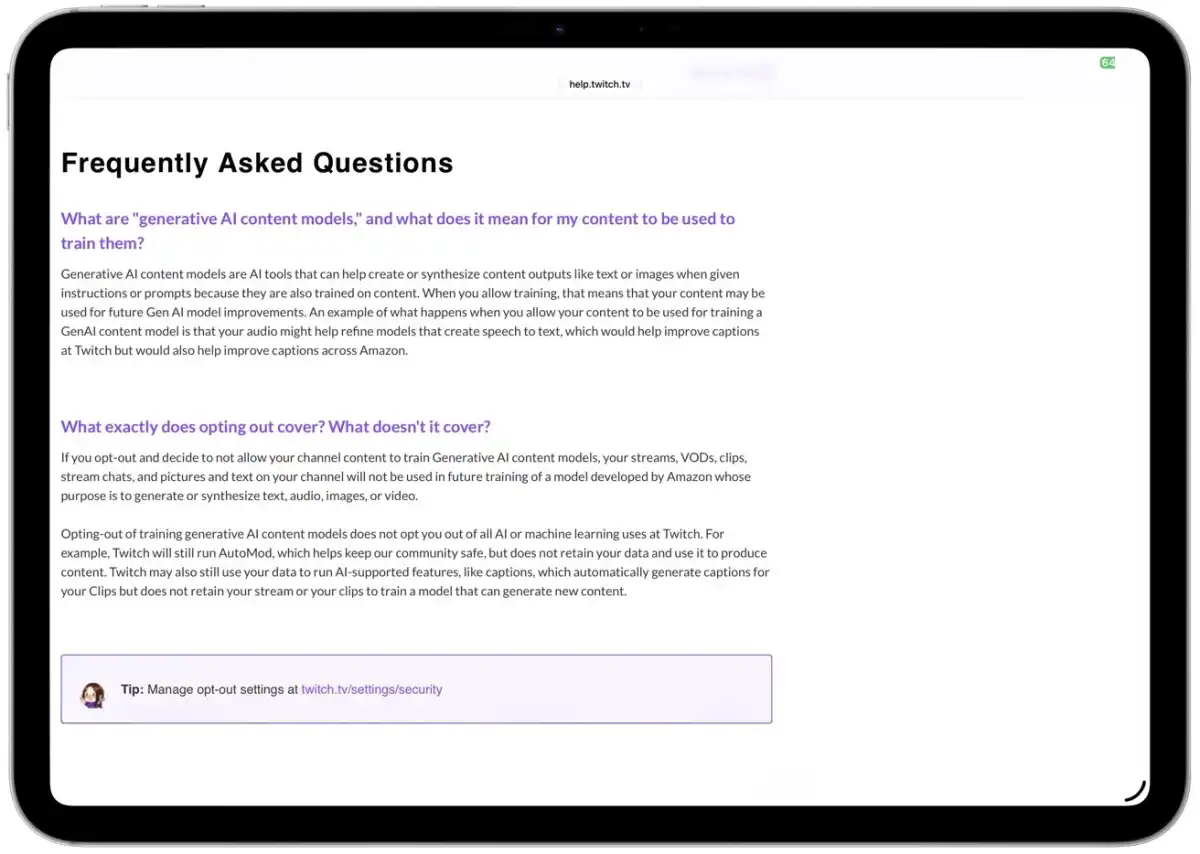
Twitch, the Amazon-owned streaming platform, has implemented a new policy that will use creators' content to train generative AI models for its parent company, Amazon, by default. This change, announced on August 12, has generated significant backlash from the streaming community due to its opt-out nature, raising concerns among adult industry platform operators regarding data consent, privacy, and the implications for AI model development.
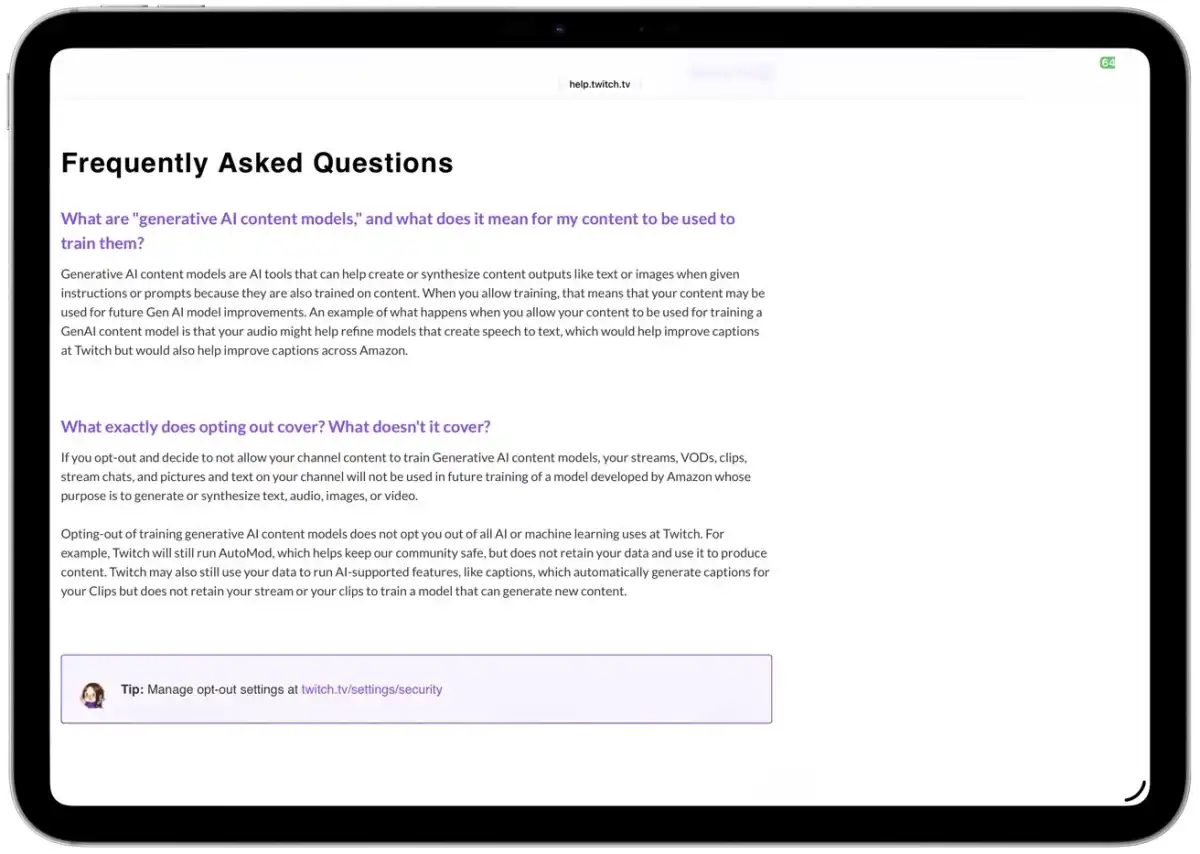
The policy means that unless streamers manually navigate to their settings and disable the feature, their broadcasts, including audio, video, chat, text, images, videos on demand, clips, and highlights, will be utilized to train Amazon's generative AI models. This default opt-in approach has been met with strong opposition, particularly given the adult industry's heightened focus on user consent, data security, and the sensitive nature of content. For platforms dealing with adult content, the automatic inclusion of user data in AI training models presents a complex challenge, potentially impacting trust and compliance with evolving privacy regulations.
What Content is Being Used for AI Training?
Under the new Twitch policy, a wide array of creator content is designated for training Amazon's generative AI models. This includes live streams, videos on demand (VODs), clips, highlights, and associated chat logs. Beyond visual and auditory data, the policy also encompasses text and images shared within a channel. This comprehensive data capture is intended to provide Amazon with a rich dataset for developing AI that can generate or synthesize new text, audio, images, or video.

For adult industry platforms, the scope of this data collection highlights critical considerations. The sheer volume and diversity of content generated on streaming platforms, often involving real-time interaction and personal expression, offers invaluable raw material for AI development. However, the use of such extensive and potentially intimate data, particularly when collected by default, underscores the need for robust consent mechanisms and transparent data handling practices. The adult industry, which frequently deals with highly personal and explicit content, must meticulously manage how user-generated data is leveraged for any AI training to maintain user trust and avoid potential legal or ethical pitfalls.
Twitch Chief Product Officer Mike Minton acknowledged the community's preference for an opt-in system during a livestream, stating, "If this was opt-in, nobody would opt in. That’s honestly the answer." This admission suggests an understanding within Twitch that its user base is largely opposed to the use of generative AI, especially given that many prevalent generative AI products are trained on materials scraped from the internet without explicit consent. The company's decision to implement an opt-out system, rather than an opt-in, reflects a strategic choice to maximize data acquisition for AI training, despite anticipated user resistance. This approach creates a precedent that adult industry platforms must carefully consider, balancing the potential benefits of AI-driven features with the imperative of user autonomy and explicit consent.
How Does This Affect Adult Industry Platforms?
The technological implications of Twitch's AI training policy for adult industry platforms are multifaceted, touching upon data privacy, content moderation, and the development of AI-powered features. The collection of thousands of hours of audio and video content, including unscripted speech and behavior, is highly valuable for training sophisticated generative AI models. For adult platforms, such data could be leveraged to develop advanced content recommendations, automated moderation tools, or even AI-generated content. However, the default opt-in mechanism presents a significant challenge.
In the adult industry, where privacy and consent are paramount, any move to automatically include user content in AI training models without explicit, affirmative consent could lead to severe backlash and erosion of user trust. Developers and platform operators in this space must prioritize clear communication and user control over their data. The confusion among Twitch streamers about whether their content had already been used for training, with Minton stating he didn't know what Amazon had done, highlights the lack of transparency that can accompany such policies. This ambiguity is particularly problematic for adult platforms, where users expect absolute clarity on how their sensitive data is handled.
Moreover, the policy distinguishes between generative AI training and other AI uses, such as captions, recommendations, sponsorship tools, streamer growth features, and safety systems like AutoMod. While opting out of generative AI training prevents Amazon from using content to create new material, Twitch can still process content for these other purposes. This distinction is crucial for adult platforms, as it means even with an opt-out for generative AI, other forms of AI processing may continue. Ensuring users understand the full scope of AI use and have granular control over their data is essential for maintaining compliance and user confidence in a highly scrutinized industry.
What are the Opt-Out Procedures and Limitations?
To opt out of Twitch's generative AI training, users must navigate to their channel settings, select the "Security and Privacy" tab, scroll down to "Training for Generative AI," and toggle the setting off. This process, while straightforward for those aware of it, is not prominently advertised. The announcement of the opt-out setting was made via a Twitch Support announcement on X (formerly Twitter) rather than a conventional blog post, contributing to concerns about visibility and user awareness. For adult industry platforms, the lesson here is clear: any data usage policy, especially one involving AI training, must be communicated with utmost clarity and accessibility, ensuring that users are fully informed and empowered to make choices about their content.
A significant limitation of the opt-out mechanism is that it applies only to future training. Twitch has not clarified whether Amazon has already used content from the platform to train models prior to the introduction of this setting. This retrospective uncertainty creates a trust deficit, as users cannot be sure if their past content has already been incorporated into AI models without their knowledge or consent. For adult content platforms, such ambiguity could be devastating, as users demand absolute certainty regarding the handling of their historical data.
Furthermore, viewers do not have control over how their messages are handled when they chat in someone else's stream; the channel owner's setting dictates whether chat messages can be used for training. This lack of individual control for participants in a stream, beyond the primary content creator, adds another layer of complexity to data consent. Adult platforms must consider the implications for all participants in interactive content, ensuring that consent mechanisms are comprehensive and extend to all individuals whose data might be used for AI training. The experience of Twitch underscores the importance of transparent, accessible, and comprehensive consent frameworks for any platform leveraging user-generated content for AI development, particularly in sensitive industries.