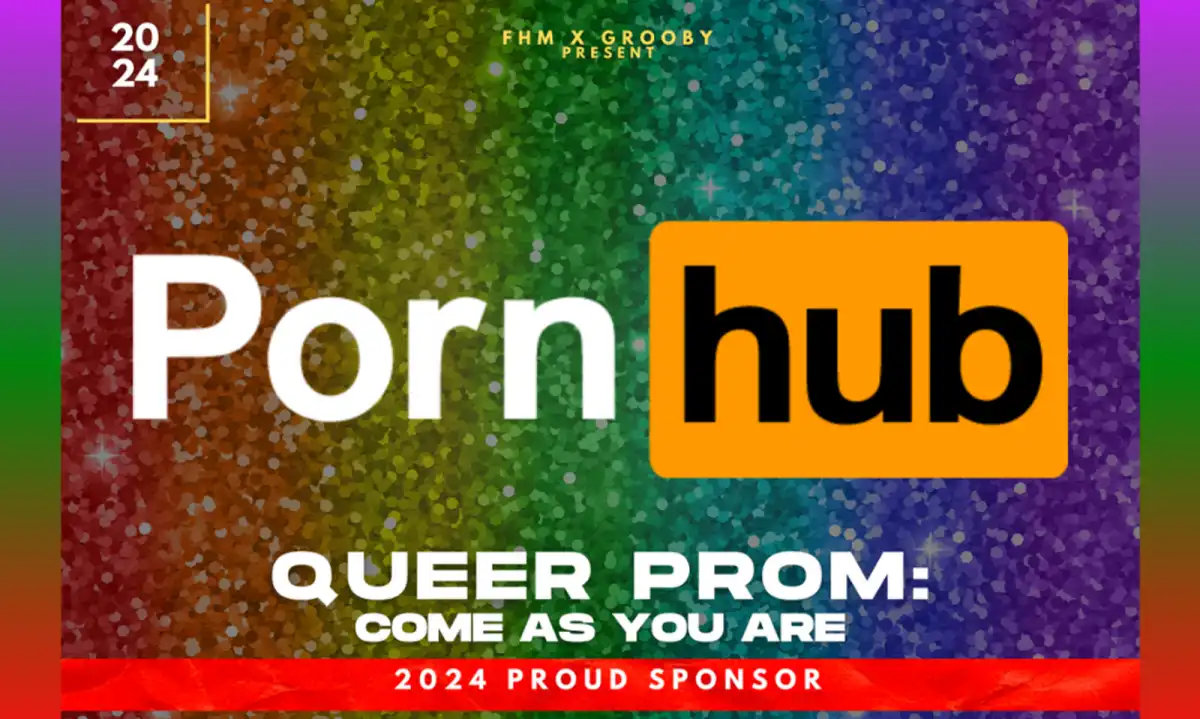
Pornhub has committed to a Platinum Sponsorship for Grooby and Flaming Hearts Media's (FHM) second annual Queer Prom, an industry event scheduled for September 25 at the Bardot in Hollywood. This marks a continued engagement by the platform with community-focused initiatives, following its Platinum Sponsorship of the inaugural Queer Prom in 2024. For adult industry platforms, such sponsorships are not merely marketing exercises but reflect a strategic approach to brand positioning, community relations, and potentially, the technical infrastructure supporting diverse content categories. The commitment to events celebrating inclusivity can influence how platforms prioritize development for content tagging, user experience for niche communities, and content moderation policies that support a wide spectrum of expression.
The technical implications for a platform like Pornhub in supporting diverse communities extend to several core areas of its operations. Ensuring that content from the LGBTQ+ community, particularly trans content creators, receives "increased platforming" and visibility, as noted by FHM co-founder Kristel Penn, requires sophisticated content management systems. These systems must be capable of precise categorization, robust search and discovery functionalities, and potentially, personalized recommendation engines that can accurately serve niche interests while maintaining a safe and inclusive environment. This often involves advanced metadata tagging, AI-driven content analysis for thematic identification, and user interface design that allows for easy navigation and filtering of diverse content types. The goal is to make content discoverable and accessible to its intended audience without alienating other user segments or violating platform guidelines.
Furthermore, the emphasis on "creating safe spaces" and "authenticity" in community events translates into technical challenges for online platforms. Cybersecurity measures and privacy protections become paramount to ensure that users and creators feel secure when engaging with content and each other. This includes robust encryption protocols, secure user authentication, and stringent data handling practices to prevent breaches or misuse of sensitive information. For platforms hosting user-generated content, maintaining a safe space also necessitates effective content moderation tools, potentially leveraging AI for initial screening of harmful or non-consensual material, complemented by human review. The balance between freedom of expression and user safety is a continuous engineering challenge, requiring constant refinement of algorithms and policy enforcement mechanisms.

What Does "Platinum Sponsorship" Mean for Platform Technology?
A Platinum Sponsorship, particularly for a major adult entertainment platform, signifies a substantial investment beyond mere financial contribution. From a technological perspective, it can imply a deeper integration or alignment of values that could influence future platform development and feature prioritization. While the sources do not detail specific technological deliverables of the sponsorship, the stated goals of "uplifting the trans community" and supporting "visibility and increased platforming of trans content creators" point to potential areas of technical focus. This could include enhancements to content submission pipelines to better accommodate diverse creator needs, improvements in content categorization for LGBTQ+ specific tags, or even dedicated sections or channels within the platform to highlight such content. These technical adjustments are crucial for translating a sponsorship's intent into tangible user and creator benefits on a large-scale platform.
The concept of "increased platforming" for specific content creators, as mentioned by Kristel Penn, suggests that platforms must continually evolve their algorithms and user interfaces to ensure equitable visibility. This is a complex technical challenge, especially for platforms with vast amounts of content. It requires sophisticated recommendation engines that can balance broad appeal with niche discovery, and search algorithms that are not biased against specific content types. Developers may need to consider how content is indexed, ranked, and presented to users, potentially introducing new metrics or weighting factors to promote diversity. Furthermore, ensuring that content creators from underrepresented communities have the tools and support to upload and manage their content effectively is an ongoing engineering task, encompassing everything from API development to creator dashboard functionalities.
Supporting "freedom of sexual expression, diversity, and authenticity" as core values, as stated by Alex Kekesi, head of brand and community at Pornhub, also has significant implications for content moderation systems. Platforms must develop and refine policies and technical tools that allow for a wide range of expression while still adhering to legal requirements and community standards. This involves complex decision-making algorithms and human review processes that can differentiate between authentic, consensual adult content and prohibited material. The engineering effort behind such systems is substantial, requiring continuous learning and adaptation to evolving content trends and regulatory landscapes. The goal is to create a moderation framework that is both effective in maintaining safety and flexible enough to support diverse forms of expression.
How Do Community Events Influence Platform Development Priorities?
Community events like Queer Prom, while seemingly external to core technology operations, can serve as crucial feedback loops for platform development teams. Direct engagement with communities, particularly those whose content is explicitly highlighted, can inform decisions about new features, user experience improvements, and even the underlying architecture of a platform. For instance, feedback from trans content creators and their allies at such events could highlight specific pain points related to content upload, monetization, or community interaction features. This qualitative data can then be translated into actionable technical requirements for engineers and product managers, ensuring that platform evolution is genuinely responsive to user needs rather than solely driven by internal metrics or assumptions.
The emphasis on "creating a safe space for everyone to be themselves and have fun" at Queer Prom directly correlates with the ongoing cybersecurity and privacy challenges faced by adult platforms. Platforms must continuously invest in robust security infrastructure to protect user data, prevent unauthorized access, and mitigate the risks of online harassment or discrimination. This includes implementing multi-factor authentication, end-to-end encryption for communications, and advanced threat detection systems. For developers, this means staying abreast of the latest security vulnerabilities and best practices, and integrating security considerations into every stage of the software development lifecycle. The commitment to safety at community events underscores the continuous, critical need for strong technological safeguards on the platform itself.
Furthermore, the support for events that celebrate "equality" and "acceptance" can influence a platform's approach to age verification and content gating technologies. While not directly mentioned in the context of Queer Prom, ensuring that diverse content is accessible to appropriate audiences while remaining inaccessible to minors is a complex technical and regulatory challenge. Platforms must deploy sophisticated age verification solutions that are both effective and privacy-preserving, potentially leveraging AI-powered identity verification or other advanced methods. The engineering effort here is significant, as these systems must be robust enough to withstand circumvention attempts while providing a seamless user experience. The broader commitment to inclusivity and safety often drives a platform to seek out and implement cutting-edge solutions in these critical areas.
What are the Technical Challenges of Supporting Diverse Content Creators?
Supporting diverse content creators, particularly those from niche or marginalized communities, presents unique technical challenges for large-scale adult platforms. One primary challenge lies in developing flexible content ingestion and metadata tagging systems. Creators often have specific needs for how their content is described and categorized to reach their intended audience. This requires platforms to move beyond generic tagging structures and implement more granular, customizable metadata options. Engineers must design databases and APIs that can handle this complexity, ensuring that content is accurately indexed and searchable, without imposing overly restrictive or insensitive categorization schemes. The goal is to empower creators to define their content in ways that resonate with their community, while still maintaining platform-wide consistency.
Another significant technical hurdle is ensuring equitable visibility and discoverability for diverse content within a vast content library. Algorithmic bias can inadvertently favor certain types of content or creators, making it harder for niche content to gain traction. Addressing this requires continuous refinement of recommendation engines and search algorithms. Developers might explore techniques such as collaborative filtering, content-based recommendations, and even fairness-aware machine learning models to ensure that a wide range of content is surfaced to relevant users. This involves extensive data analysis, A/B testing, and iterative development to optimize visibility without compromising the overall user experience or platform performance. The aim is to create an ecosystem where all creators have a fair opportunity to be discovered.
Finally, the commitment to "uplifting the trans community" and "increased platforming of trans content creators" necessitates a focus on platform features that support creator monetization and engagement. This can involve developing flexible payment processing systems that accommodate various payout methods and currencies, and ensuring that creators can easily track their earnings and audience engagement. Furthermore, tools for community interaction, such as direct messaging, fan clubs, or live streaming capabilities, must be robust and secure. Engineers must design these features with scalability and security in mind, ensuring they can handle high traffic and protect sensitive interactions. The technical infrastructure supporting creator success is a continuous area of investment, directly impacting a platform's ability to foster a thriving and diverse creator ecosystem.