
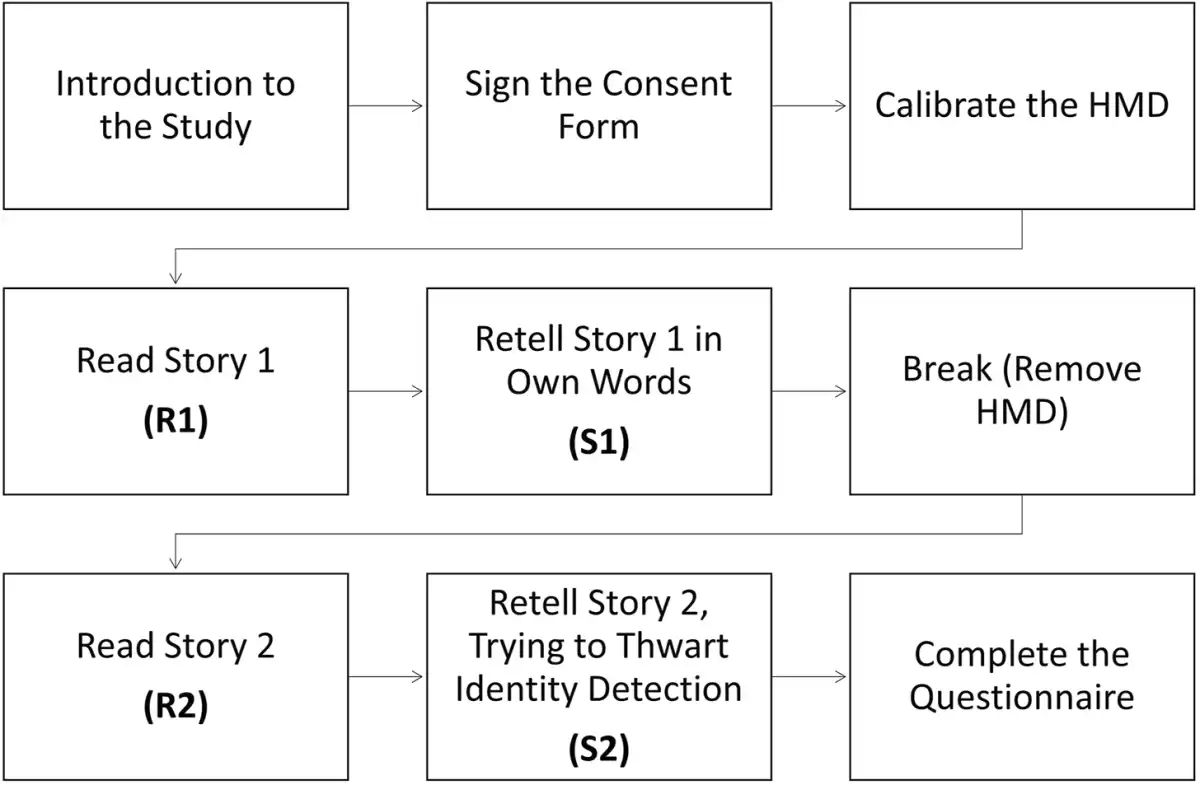
A new study has highlighted the potential for unauthorized user identification in virtual reality (VR) environments through the exploitation of uncoordinated privacy protections in eye tracking and VR motion data. Researchers from Texas State University have demonstrated that combining eye tracking, headset tracking, and hand tracking data can increase the rate of successful user identification, even when individual data streams are protected.
The study, published in arXiv, evaluated the effectiveness of various privacy-enhancing techniques in protecting VR users' identities. The researchers found that applying privacy protections to only a subset of available data streams can create an opportunity for adversaries to bypass those protections by using other unprotected data streams.
Background and Context: Virtual Reality and Biometrics
Virtually reality (VR) systems collect a vast amount of data from various sensors, including those that track users' body movements over time. This information is used to deliver immersive experiences but also contains sensitive details about users' physical traits and behavioral patterns.

Biometric data, such as eye tracking, facial expressions, voice prints, and physiological signals, are increasingly being collected in VR environments. These data points can be used to identify individuals or infer their preferences, mood, and cognitive load. However, the combination of these signals can expose users' sensitive information, making them vulnerable to unauthorized identification.
Researchers have been exploring the potential risks associated with behavioral data as an identification mechanism in immersive VR applications. A study published in Frontiers found that machine learning algorithms can identify VR users across multiple sessions and activities with high accuracy, even when users attempt to deliberately obfuscate their behavior.
Why it Matters to the Industry: Privacy Risks and Consequences
The findings of these studies have significant implications for the adult industry, where user identification and authentication are critical components. The potential for unauthorized access or misuse of sensitive data can compromise users' trust and confidentiality.
The use of biometric data in VR environments raises concerns about re-identification and linkage, as well as the ability to connect behavioral patterns back to individual accounts. This creates a privacy paradox, where the richness of VR experiences comes at the cost of increased vulnerability to unauthorized identification.
What Comes Next: Addressing Privacy Risks and Ensuring User Trust
To mitigate these risks, researchers and industry experts must work together to develop more robust technical measures for safeguarding behavioral privacy in VR environments. This may involve implementing comprehensive privacy-enhancing techniques that address multiple data streams comprehensively.
Additionally, the adult industry should prioritize transparency and user education about biometric data collection and usage. By providing clear information about what data is collected and how it is used, platforms can empower users to make informed decisions about their participation in VR experiences.
Key Facts
- The study published in arXiv demonstrated that combining eye tracking, headset tracking, and hand tracking data can increase the rate of successful user identification in VR environments.
- Researchers found that applying privacy protections to only a subset of available data streams can create an opportunity for adversaries to bypass those protections.
- The study published in Frontiers showed that machine learning algorithms can identify VR users across multiple sessions and activities with high accuracy, even when users attempt to deliberately obfuscate their behavior.
- Biometric data collected in VR environments includes eye tracking, facial expressions, voice prints, and physiological signals.
- The combination of biometric data points can expose users' sensitive information, making them vulnerable to unauthorized identification.