
Safari, Apple's web browser, has been playing catch-up with its competitors when it comes to AI-powered features. However, at WWDC 2026, Apple announced a raft of new Safari upgrades powered by Apple Intelligence, including automatic tab organization, AI-generated custom extensions, and new privacy-first browsing tools.
What Happened
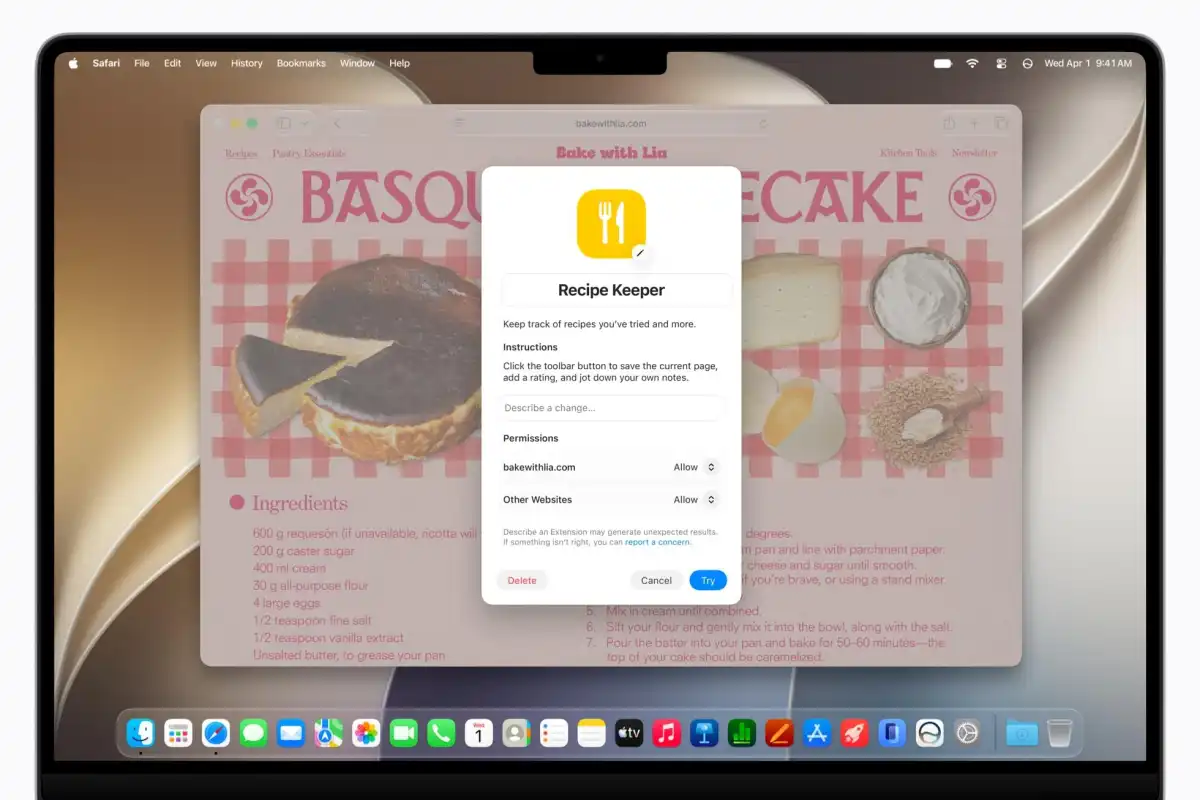
Apple's demo showed how users can ask Safari to create an extension by describing it. For example, if a user wants to save and track cooking recipes from around the web, they can simply tell Safari what they want in plain English. From there, Safari used Apple Intelligence to generate a "Recipe Keeper" extension that's supposed to do just that.
The new features include automatic tab organization, which uses Apple Intelligence to group open tabs into relevant topics without any manual intervention. If someone is planning a weekend trip, for example, Safari can pull all of their travel-related tabs into a single topic. As browsing continues, Safari will slot new tabs into existing topics or create fresh ones as needed.

Another interesting addition is "Describe an Extension," which lets users create custom Safari extensions using natural language prompts. Apple showed an example in which a user could add custom recipe-rating tools directly to webpages without writing any code.
Background and Context
Safari has long lacked the robust library of extensions that its rivals have, mainly due to the stringent development requirements from Apple. However, with the new features announced at WWDC 2026, Apple is trying to solve one of Safari's biggest weaknesses with AI.
Over the past couple of years, Chrome, Edge, and Firefox have quickly snapped up new AI features, while Safari has largely lagged behind as Apple slowly fed AI into its products. Until now, Safari's AI toolset has been slim compared to competitors, as it has just offered AI summaries of webpages through a Highlights feature.
Apple is also adding another familiar feature to Safari: the ability to change compromised passwords on your behalf. With the update, Apple's Passwords app uses Safari and Apple Intelligence to navigate to a website, sign in, and update weak or compromised passwords to strong ones with a single tap.
Why it Matters
The new features announced at WWDC 2026 could help fill the gap left by the Google Chrome and Mozilla Firefox extensions not available on Safari. It should also appeal to those building an arsenal of personal software for themselves with AI.
For adult-industry platforms and operators, these features have significant implications. With automatic tab organization, users can easily manage multiple tabs related to different projects or clients. This could lead to increased productivity and efficiency, as well as improved organization and collaboration.
What Comes Next
Apple's AI strategy suddenly feels a lot more practical, focusing less on flashy AI demos and more on removing everyday annoyances. Organizing browser tabs, tracking webpage changes, and updating weak passwords are all things people regularly struggle with, but rarely enjoy doing themselves.
The new features will be available in the next update of Safari, which is expected to roll out soon. However, it's unclear when exactly these features will become available, or how they will be implemented in practice.
Key Facts
- Apple announced a raft of new Safari upgrades powered by Apple Intelligence at WWDC 2026.
- The new features include automatic tab organization, AI-generated custom extensions, and new privacy-first browsing tools.
- Safari can now organize tabs into relevant topics without any manual intervention.
- Users can create custom Safari extensions using natural language prompts.
- Apple's Passwords app uses Safari and Apple Intelligence to navigate to a website, sign in, and update weak or compromised passwords to strong ones with a single tap.
The new features announced at WWDC 2026 could help fill the gap left by the Google Chrome and Mozilla Firefox extensions not available on Safari. It should also appeal to those building an arsenal of personal software for themselves with AI.